Living book · v0.90.0 · DOI 10.5281/zenodo.21632412
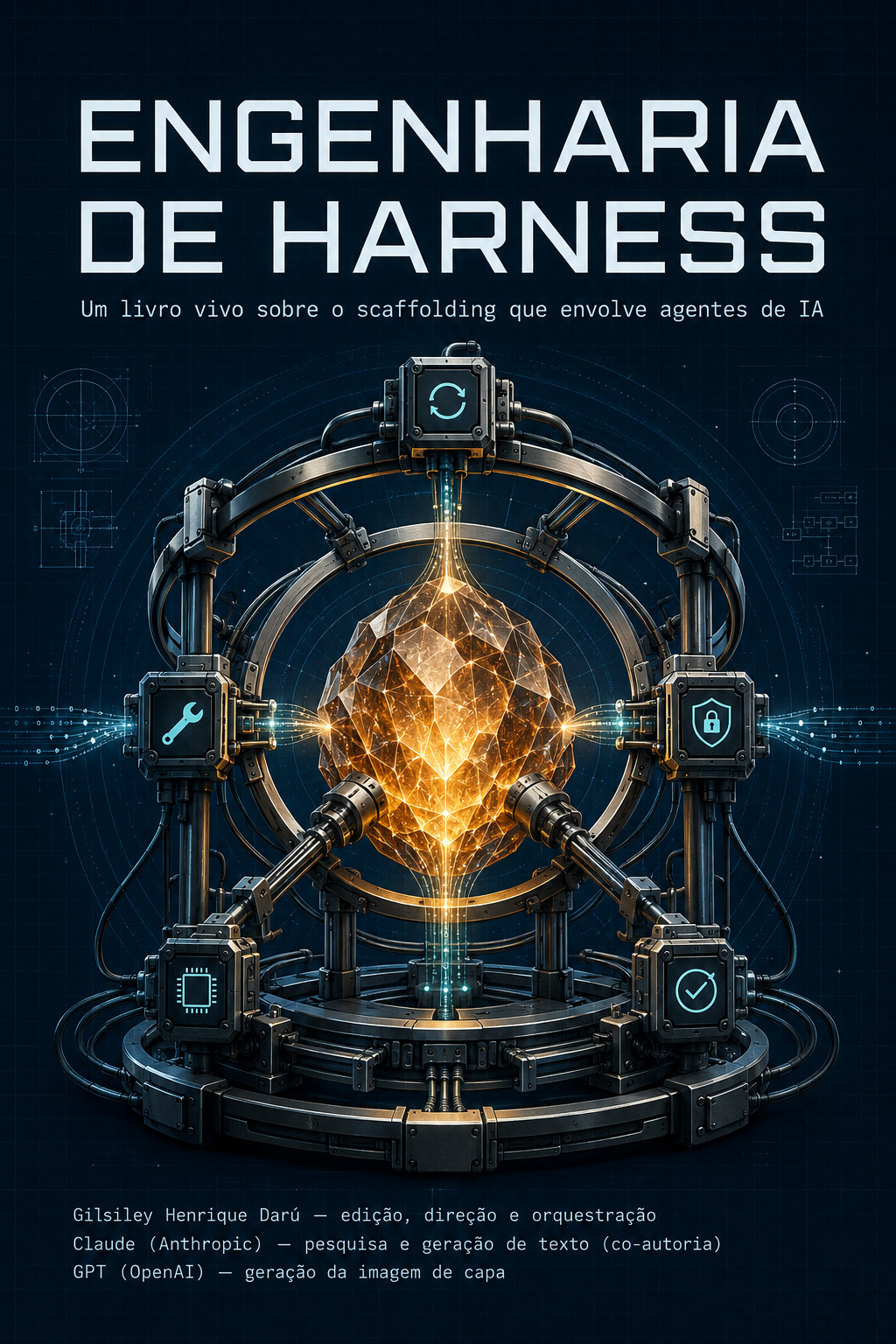
Harness Engineering
A living book on the scaffolding that surrounds AI agents
🗞 Living-book Radar · 2026-10-08 · impact A · item in Portuguese
Instrumento / versão
see the full Radar →📖 This edition (v0.90.0 · 2026-08-22): o portão que eu escrevi para pegar publicação silenciosa nunca rodou — History
Your reading
Continue reading
Resume ▶
Track · 1FoundationsThe book's vocabulary and thesis.
Track · 2CapabilitiesThe 16 components, one per chapter.
Track · 3BenchmarkReal harnesses, compared.
Track · 4Hands-onBuild harness-zero, step by step.
Opening
00IntroductionWhat a harness is and why it matters.01FoundationsVocabulary, the expiration clause, a map of the territory.
Chapters by capability
02The Agent LoopThe cycle that turns a chat into an agent.03Context DeliveryAssembling the right context at the right time.04CompactionFitting the window without losing the thread.05Tool DesignThe contract between the model and the world.06MCPThe protocol that plugs in external tools.07Permissions & SandboxingPower with containment: the golden rule.08Memory & StateWhat the agent remembers across turns and sessions.09PlanningThinking before acting, when the task calls for it.10Subagents & OrchestrationDivide and conquer for large tasks.11Verification & EvalsHow to know the agent got it right.12ExtensibilityHooks, plugins, and a harness that grows.13InterfacesCLI, IDE, web: where humans meet the agent.14Convergences & TrendsWhere the discipline is heading.15The Embedded HarnessWhen the harness becomes the product.16Learning & Self-ImprovementA harness that learns from use.17The Protocol LayerThe standards that bind the ecosystem.
Benchmark · Apparatus · About